Jamal Bin Huwaireb
Documents are the remaining speaking tongue and the faithful witness which establishes history and informs the descendants about some of the news that occurred during the times of the ancestors.
Documents are the scale that weighs civilized nations, and distinguishes them from those that forgot their past, overlooked it, and viewed the present as the beginning and the end.
A nation that only looks at the present without looking at its past is at a great precipice.
This is because the present will inevitably become a past, and the present in which we live was a future that parents and grandparents looked forward to. Those who witnessed and narrated the news of their ancestors in the bittersweet past days were able to record them despite the scarcity of the means of recording during that primitive era. The talks in the moonlit nights were conveyed in prose, poetry, and narration, making the Arab Library rife with hundreds of historic works in addition to giving history its full consideration. The Arab Library discloses priceless treasures, in which they wrote the news and conditions of their ancestors, with their pros and cons.
Unfortunately, today we do not pay attention to the importance of documents in our lives. We would not have those heritage manuscripts that our ancestors had categorized, and the Arab library would not contain thousands of invaluable works, unless those manuscripts were kept and recorded by the people who followed our ancestors and were aware of their importance.
The Demise of Documents
When a man of importance dies nowadays, all the documents he left behind die as well. His family bury them alive with him, and they do not know that these documents will unveil important details in the near future. What is new now will be old later, this is the way of the world.
My friend, Professor Ali al-Matroushi, found a very precious ancient manuscript tossed in the trash. This manuscript is now in the Ajman Museum. Had it not been found by Professor Al-Matroushi, it would have been lost in the trash, as were hundreds of documents that had fallen victim to the neglect of the owners' families.
There was a scholar who used to recite Quran over patient. He was born at the beginning of the last century in Jumeirah. This man was well aware of documentation. He used to write down the names of the newly born babies, names of the dead, the poems of poets he heard and the incidents he witnessed in full details. His notebooks contain very valuable historical memories of the region.
This scholar passed away in 1991, and his family threw and burned all these notebooks. (There are many records of documents belonging to families, companies and institutions that were destroyed due to the neglect of their owners and the lack of awareness of their value). God Almighty willed that this scholar was visited by a friend of his six months before his death. The scholar memorized a 50 stanza poem he had heard from the poet himself who died in the early sixties. The visitor wrote down the poem as he heard from the scholar - it is not documented in the original poet's book of verses and is a historical poem chronicling important events. After the death of that righteous scholar and the mistake his children committed to his documents, this poem was the only survivor from this cultural holocaust.
Berlin Museum
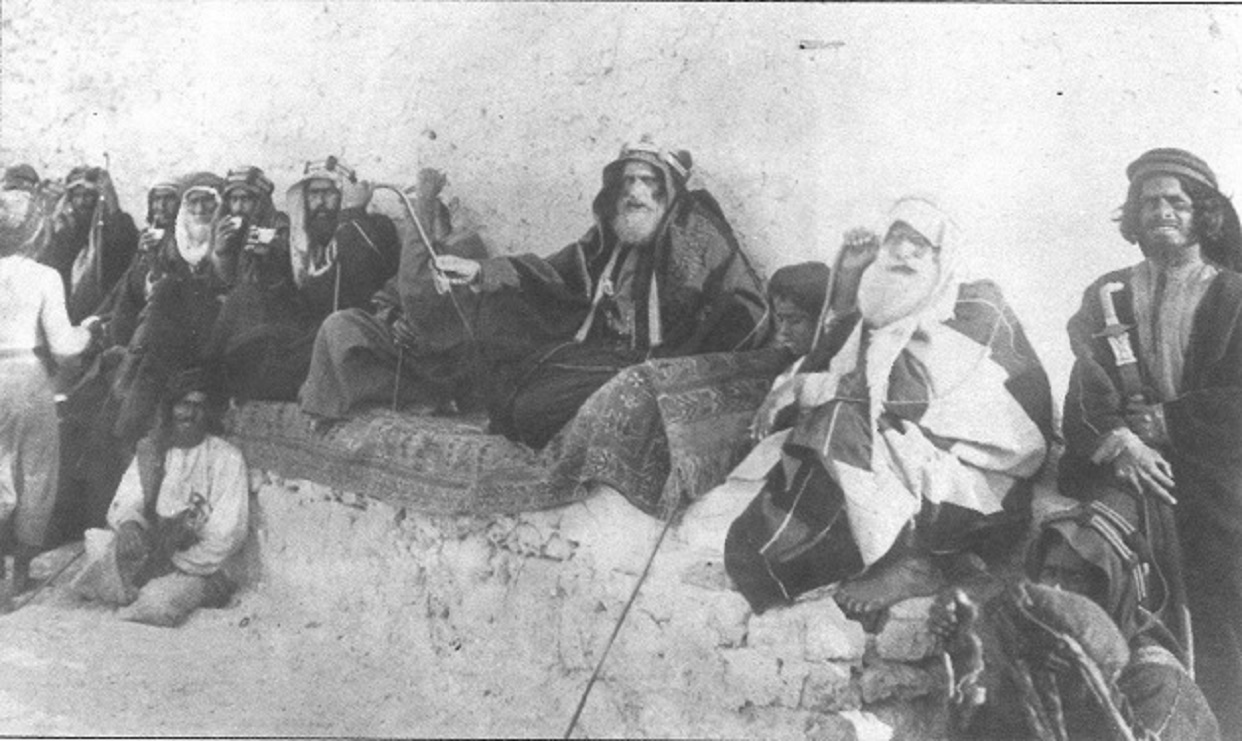
Here, we highlight an example that gives us an idea of the importance of preserving documents. When I visited the Berlin Museum in 1997, located in East Berlin, and while viewing the pictures displayed there, I saw a rare image of Sheikh Zayed bin Khalifah (Zayed the First), taken by a German traveler and photographer who visited Abu Dhabi and Dubai in 1909.
I called the woman who studied these pictures in 1997 and asked the museum director: 'How did these pictures reach here?'. He said: In 1909, this German photographer was killed in Yemen, so his memoirs and photos were moved to Berlin, and his nephew came, after years, and delivered these pictures and memos. This is how these precious pictures - depicting Sheikh Zayed the First sitting in front of a fortress, and show his children on horses - were preserved. Without the awareness of traveller's nephew about the value of the documents, which the traveller spent his life in collecting, we wouldn't have obtain them. These photos document scenes that were not documented in that ancient time.
Documents are the link between us and the past, and the break of this chain represents a rift in society. Not only do I mean by documents what is written, but it is a word that includes the written form and other tools, pictures and audiovisual recordings. All these documents bear witness to the past, and give the generations the determination and persistence to build on the foundation established by their fathers, to follow the path and complete the journey. Life is a chain whose rings are linked to together. When the ring of the past is cut off, we will go into the dark, distorted present. But when we adorn our present with the documents of the past, the chain completes its rings, and then the generations build their future on a solid unshakable foundation regardless of the winds o
مقالات ذات صلة

سلالات الخيل.. سفراء العرب إلى العالم
مدارات ونقوش (خاص) كانت الخيل ولم تزل ذلك المخلوق المكرم الذي تجاوز الوصف حتى غدا معشوق الفرسان والأشراف. والجواد من الخيل بمنزلة طبقة النبلاء في عالم الحيوان، إذ قلما اجتمعت صفات في حيوان ما كما اجتمعت في الخيل من حيث…
بدوي دوَّن الألمان مذكّراته
قاسم بن خلف الرويس - صحفي وكاتب سعودي جوهن جاكوب هيس ( Johann jakob hess ) 1866-1949م مستشرق عني بلهجات البدو داخل الجزيرة العربية، درس في جامعة شتراسبورج على يدي نيلدكه، وأقام في البلاد العربية عدة سنين، واهتمَّ خصوصاً…
منهج ابن أبي أصيبعة في كتابه عيون الأنباء في طبقات الأطباء
مريم جمعة عبدالله - كاتبة وباحثة إماراتية لا أتذكر بالضبط متى اشتريت كتاب (عيون الأنباء في طبقات الأطباء). ما أذكره أنني اشتريته في المرحلة الإعدادية لبحث في مسابقة نظمتها المدرسة، من مكتبة دار الآداب الواقعة في شارع…
أبوظبي في كتابات الرحالة الغربيين
د. علي عفيفي علي غازي - صحفي وأكاديمي مصري تتمتَّع إمارة ومدينة أبو ظبي بموقع جيواستراتيجي يقوم على أُسس ومقومات كامنة في الأرض والسكان. وقد عَبَّر الكاتب الفرنسي جان جاك بيريبي عن هذه المقومات بقوله: «لقد كان من شأن…